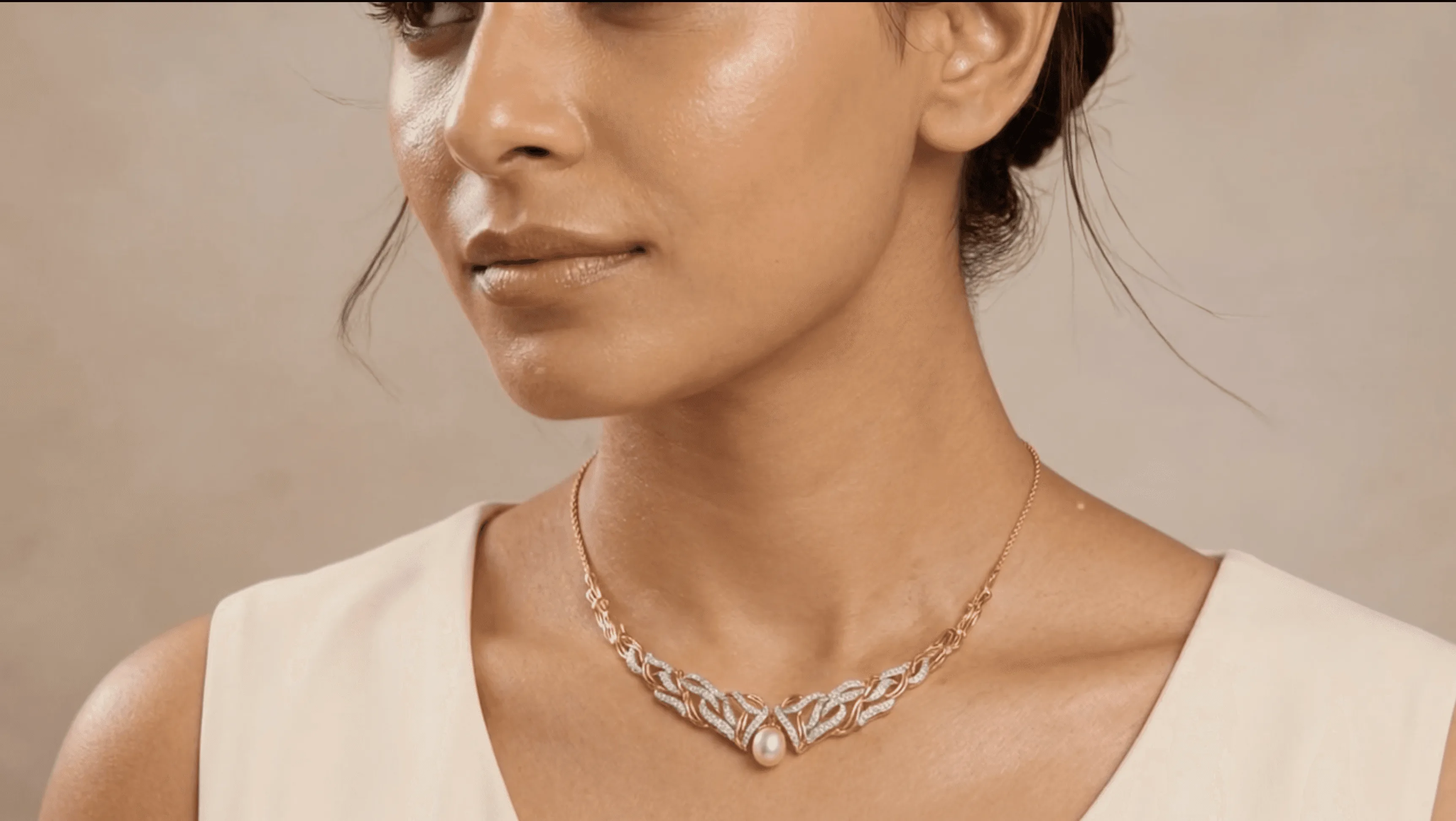
A jewelry brand came to us last quarter with a quiet problem.
Beautiful designs. Real craftsmanship. Strong reviews. And a growth curve that wouldn't move.
The reason wasn't marketing. It was sequence.
The old playbook is expensive guessing
Every collection went the same way: design, source gold and stones, cast, photograph, stock, then — finally — launch.
By the time a piece hit the feed, lakhs were already locked into it. And only then did the market get a vote.
The pieces that didn't sell didn't disappear. They sat. They got remarketed. Eventually they got melted down at a loss.
That's not a marketing problem. That's a capital problem dressed as a marketing problem.
The flip
The brand already had something they weren't using. Every modern jewelry studio designs in CAD. Before a piece is cast, it exists as a high-fidelity 3D render — already paid for, already detailed.
We took those renders and turned them into video ads with GaanaAI. Multiple cuts per design. Editorial, lifestyle, festive. Reels, Stories, feed — every format the brand was already running on.
No casting. No models. No shoot day. No inventory.
What GaanaAI generated from the renders
No casting, no models, no shoot day. Just renders the brand already had, turned into ad-ready cuts in days.
Same level of polish a traditional jewelry shoot takes weeks to produce.
What we ran
Twenty designs. Multiple video variants per design — different aesthetics across the same collection so the market could vote on the framing as well as the piece. Live across paid and organic on Instagram and Meta.
The campaigns weren't built to sell. They were built to measure — saves, comments, DMs, completion rate, wishlist adds. Each piece was being scored on real demand, not internal favorites.
Two weeks in, the pattern was unmissable.
The result
Six designs pulled almost all the demand. Four were soft. Ten clustered in the middle.
The brand cast the six winners at full confidence. Killed the four soft ones before a gram of gold was sourced. Cast the middle ten in tight batches.
Inventory committed at launch: down ~60%.
Sell-through on the new collection: nearly doubled.
Design-to-ad-live: months → days.
And quieter, but maybe the most important shift — the design team got real market feedback on twenty ideas instead of being capped at the four or five they could afford to actually produce.
This is the unlock for capital-heavy categories
Jewelry isn't unique. Watches, eyewear, designer furniture, couture — anywhere the cost of making the product is high enough that betting on inventory before measuring demand is a real risk.
For decades, the answer was a senior buyer's gut. Sometimes brilliant. Often expensive.
The render exists before the piece does. AI video can turn it into ad-quality creative in days. Social will tell you which pieces the market wants — if you ask before you cast.
Design → render → video → measure → produce only winners.
Capital stops getting deployed on faith. It gets deployed on evidence.
"But the magic is in real photography"
It is. The hero shoot still happens. It just happens for the winners — pieces the brand already knows the market wants. The shoot stops being a guess and becomes a celebration.
If you run a jewelry brand, you already know the math
Look at your last collection. Count what moved. Count what sat. Look at what you committed in gold price at launch versus what you discounted six months later.
That gap is the cost of the old sequence.